
Winter dressing in Finland: layering and frost limits
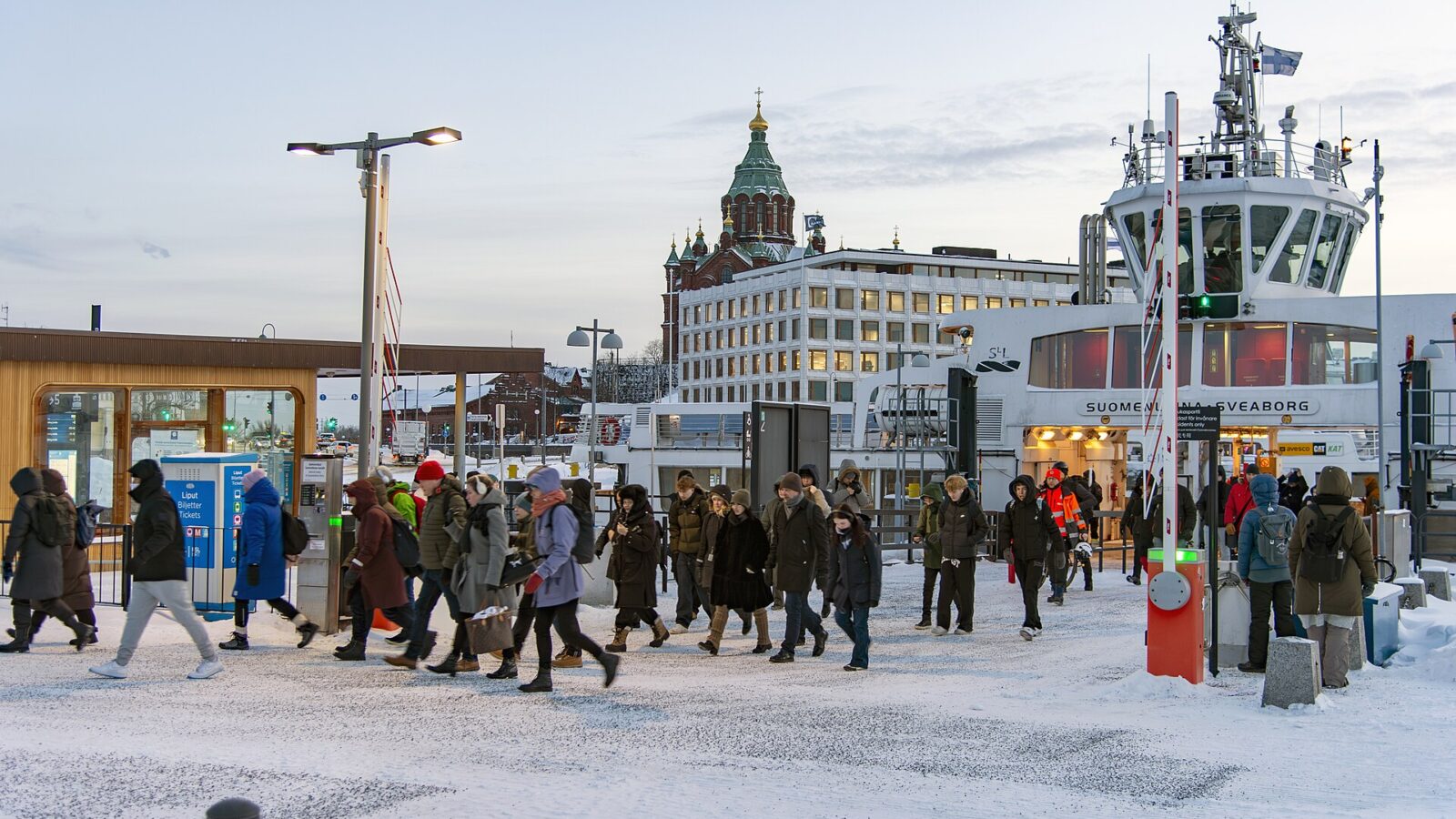
Short answer: In the Finnish winter, feeling warm doesn't come from one thick coat, but from layers. The base layer moves moisture away from the skin, the middle layer insulates, and the shell layer stops the wind. And one figure matters more than many realize: according to the Finnish Meteorological Institute's wind chill chart, a temperature of −20 degrees feels like −30 degrees in a 10 meter per second wind. That is why you should always look at the "feels like" figure in the forecast, not just the thermometer.
How does layering work?
There are three layers, and each has its own job. Next to the skin is the base layer, whose task is to move sweat away from the skin. According to the winter guide on Metsähallitus's Luontoon.fi website, effective materials include merino wool and technical synthetic fibers — wool keeps you warm even when damp. On top of the base layer, you wear a middle layer that insulates: fleece, a wool sweater, or a thin insulated garment. The outermost layer, or shell layer, protects against wind and snow.
The most important piece of advice sounds counterintuitive: don't dress too warmly. Metsähallitus advises that when moving, appropriate clothing is what makes you feel slightly chilly when standing still. If you sweat, the moisture stays in your clothes and makes you cold during breaks. Adjust your layers along the way — unzip when going uphill, put on an extra layer from your backpack as soon as you stop, before the cold sets in.
Why does the wind change everything?
The wind strips the warm layer of air from the surface of the skin, and bare skin cools down quickly. The Finnish Meteorological Institute's "feels like" figure is calculated from both temperature and wind speed together. The institute's own example: when it is 20 degrees below zero and the wind is blowing at 10 m/s, the wind chill is −30 degrees. The same phenomenon is visible in warnings. The Finnish Meteorological Institute issues a warning for severe frost in Southern Finland when the temperature or wind chill index drops below −20 degrees (yellow level), below −30 degrees (orange), or below −35 degrees (red). In the central part of the country, the limits are five degrees stricter, and in the northern part, ten degrees stricter.
Practical conclusion: on a windy day, −12 degrees may require the same gear as −20 degrees on a calm day. In open places — on lake ice, on a fell, on a ferry deck — the wind always hits, while in the shelter of the city, it hits less often.
What to wear when it is −10, −20, or −30 degrees?
The outfits below are based on the Finnish Meteorological Institute's frost limits and Metsähallitus's layering instructions for regular outdoor activities and commuting. Physical activity warms you up: a skier manages with one layer less than someone standing at a bus stop.
−10 degrees: merino wool or technical base layer, fleece or wool sweater as a middle layer, winter coat and insulated trousers or lined outdoor trousers. A beanie that covers the ears, mittens on your hands, and wool socks plus winter shoes that have room for air in addition to the sock.
−20 degrees: the same layers, but the middle layer is reinforced — you also add a middle layer to your legs between the base layer and the outer trousers. Protect your neck and face with a neck warmer or balaclava, because the wind makes this temperature feel like −30 degrees. It is worth breaking up outdoor time and going inside to warm up in between.
−30 degrees: cover all skin — including the face — and keep time outdoors short. In Southern Finland, this is already the level of the Finnish Meteorological Institute's orange frost warning. The thickest mittens, felt-lined or similarly insulated boots, and a full layer set are essential, and unnecessary outdoor activity should be postponed to another day.
How to keep hands, feet, and head warm?
Extremities get cold first, and the layering principle works the same way there as it does for the body. According to Metsähallitus, mittens are the warmest type of glove because the fingers warm each other — gloves with fingers always lose. Gloves and beanies get wet from snow and sweat on practically every trip, so a spare pair belongs in your backpack or pocket; a dry beanie pulled on during a break is a small thing that feels like a big one.
For feet, space is the deciding factor. The shoe must be loose enough so that your toes can move and there is air around the wool sock — a tight shoe makes you colder than a thin sock in a spacious shoe. Choose a beanie that covers your ears and the nape of your neck; in severe frost, wear a balaclava under or instead of it, which also protects your cheeks and neck.

What about children and the daycare frost limit?
In Finland, daycares go outside every day, even in winter. In its guide for families, the City of Jyväskylä states that children go outside even in rain and frost — the frost limit is about −15 degrees depending on the children's age. The child must have weather-appropriate clothing and enough spare clothes.
There is no official national frost limit. In an investigation by Iltalehti, early childhood education directors in Espoo, Turku, Jyväskylä, Kuusamo, and Inari said that decisions are made on a daily basis: they are influenced not only by frost but also by wind, slipperiness, and the children's clothing, and on the coldest days, they only go outside briefly. The parent's part is therefore in the wardrobe: a proper winter overall or coat and trousers, a wool layer underneath, two pairs of warm mittens, and spare clothes in the daycare locker.
One tip from Metsähallitus applies especially to small children: do not overdress a child who is moving, because they will get hot while playing, but a child sitting in a sled or stroller does not produce heat themselves and needs significantly thicker gear than an adult might estimate. It is worth packing spare mittens and socks for every trip, because children get wet in the snow more surely than adults.
The darkest time of winter falls on the same weeks as the most severe frosts. If the polar night and short days are on your mind, also read: Polar night: how long is the day in December in Helsinki, Rovaniemi, and Utsjoki and Northern lights: when and where are they most likely to be seen.
Read also


Read next in the same section
Nastakengät ja liukuesteet — näin valitset pitävät talvikengätReport an error · Discuss on Facebook @arkisuomi
Publisher: Arki Suomi · About us and the newsroom · Contact