
The Pact Is Renounced, 28 November 1939 – Two Days Before the Winter War
On 28 November 1939 the Soviet Union unilaterally tore up the non-aggression pact that was meant to keep the peace with Finland until the end of 1945. Molotov's note to envoy Aarno Yrjö-Koskinen in Moscow was the last diplomatic step before relations were severed — and, two days later, the Winter War began.
TODAY IN FINNISH HISTORY · 28 NOVEMBER
Watch the English video on Facebook: https://www.facebook.com/reel/1852373659319681
Watch the English video on YouTube: https://youtube.com/shorts/Y1leOICir3Q
Watch the video on YouTube (in Finnish): https://youtube.com/shorts/vIkcN8wF59Y
Finland’s peace with the Soviet Union rested on a piece of paper — a non-aggression pact signed in 1932 and later extended to the end of 1945. On 28 November 1939, Moscow tore that paper up. Soviet People’s Commissar for Foreign Affairs Vyacheslav Molotov handed the Finnish envoy in Moscow, Aarno Yrjö-Koskinen, a note declaring that the Soviet Union no longer considered itself bound by the pact. Two days later, Soviet forces invaded Finland.
What happened?
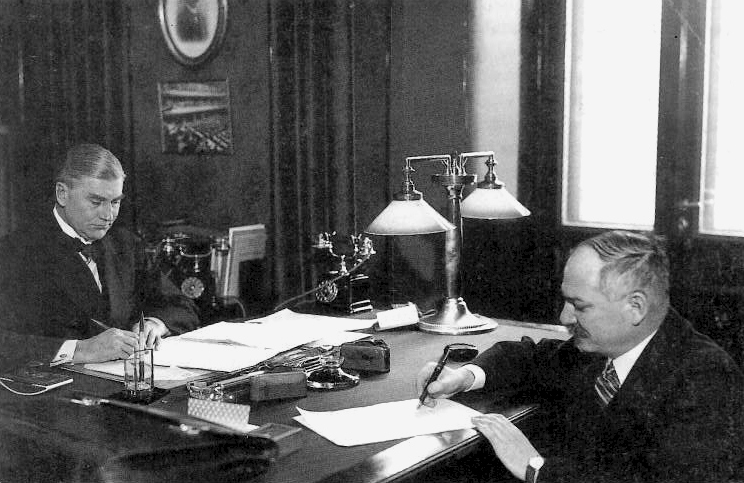
Finland and the Soviet Union had signed their treaty of non-aggression and peaceful settlement of disputes in Helsinki on 21 January 1932. The signatories were Finland’s foreign minister Aarno Yrjö-Koskinen and the Soviet envoy to Helsinki, Ivan Maisky. Both countries pledged not to attack each other and to settle disagreements peacefully. In April 1934 a protocol signed in Moscow extended the treaty to 31 December 1945. (Soviet–Finnish Non-Aggression Pact, Wikipedia)
On 26 November 1939, artillery fire was heard near the border village of Mainila. The Soviet Union accused Finland of shelling its troops and demanded that Finnish forces withdraw 20–25 kilometres from the border. Finland denied the charge — its artillery had been pulled so far back that it could not even reach Mainila — and on 27 November proposed a joint investigation of the incident and talks on a mutual pullback of troops. (Shelling of Mainila, Wikipedia)
The answer came on 28 November, in Molotov’s note. The renunciation was unilateral, and the treaty gave no right to abandon it mid-term. Finland replied on 29 November that the decision was unjustified, and offered to take the dispute to the conciliation procedure written into the treaty itself, or to neutral arbitration. That same day, Moscow severed diplomatic relations. (U.S. Department of State, FRUS 1939)
Background
Through the autumn of 1939 the Soviet Union had pressed Finland for territory and bases on the Gulf of Finland; the Moscow negotiations broke down in mid-November. The Mainila shots gave the Soviet leadership the pretext it needed. According to the Soviet claim, Finnish artillery had fired seven shells, killing four Soviet soldiers and wounding nine. Later research — and eventually Russian admissions — established that the incident was a Soviet provocation: the shells were fired from the Soviet side.
What happened next?
On the morning of 30 November 1939, the Soviet Union attacked Finland along the entire border, without a declaration of war, and bombed Helsinki. The Winter War had begun. It lasted 105 days, until 13 March 1940. A pact written to protect the peace for years had been broken within a week of the note that prepared its breaking. (Winter War, Wikipedia)
Why it still matters
The 1932 pact and its extension to 1945 had been cornerstones of Finnish security policy throughout the 1930s. Its one-sided renunciation showed that a written promise protects a small country only as long as a great power chooses to honour it. The sequence — a staged incident, a torn-up treaty, then the invasion — remains the classic prelude to the Winter War, and a lasting lesson in how wars are prepared on paper before they are fought on the ground.
On the same day
On 28 November 1893, women in New Zealand voted in a general election for the first time. Earlier that year New Zealand had become the first self-governing country to grant women the vote.
Sources
- Soviet–Finnish Non-Aggression Pact — Wikipedia (signing 21 Jan 1932, extension protocol 7 Apr 1934, renunciation 28 Nov 1939)
- Shelling of Mainila — Wikipedia
- U.S. Department of State — Foreign Relations of the United States, 1939, Volume I
- Finnish Ministry for Foreign Affairs document collection (Finland’s notes of 27–29 Nov 1939)
Photos and credits
- Hero: The signing in Helsinki, 21 January 1932 — Yrjö-Koskinen (left) and Maisky. Photo: WSOY picture archive / Wikimedia Commons, public domain.
- Foreign journalists at Mainila, 29 November 1939. Photo: SA-kuva (Finna: sa-kuva-110940), CC BY 4.0. Photographer unknown.
- Fire at the corner of Lönnrot and Abraham Streets after Helsinki’s first bombing, 30 November 1939. Photo: Military Museum / SA-kuva (Finna: sa-kuva-105737) / Wikimedia Commons, public domain. Photographer unknown.
- Foreign press at Mainila. Photo: SA-kuva (Finna: sa-kuva-110943) / Wikimedia Commons, public domain. Photographer unknown.
- Portrait of Vyacheslav Molotov. Photo: G. Weil / TASS / Wikimedia Commons, public domain.
Read also

Svinhufvud’s Senate Took Office on 27 November 1917 – Nine Days Before Independence
17 hours ago
Report an error · Discuss on Facebook @arkisuomi
Publisher: Arki Suomi · About us and the newsroom · Contact