
The Mainila Shots, 26 November 1939 – the staged incident that led to the Winter War
On 26 November 1939, the Soviet Union falsely accused Finland of shelling the border village of Mainila in an incident later acknowledged to have been staged. Four days later, the Soviet Union invaded Finland, beginning the Winter War.
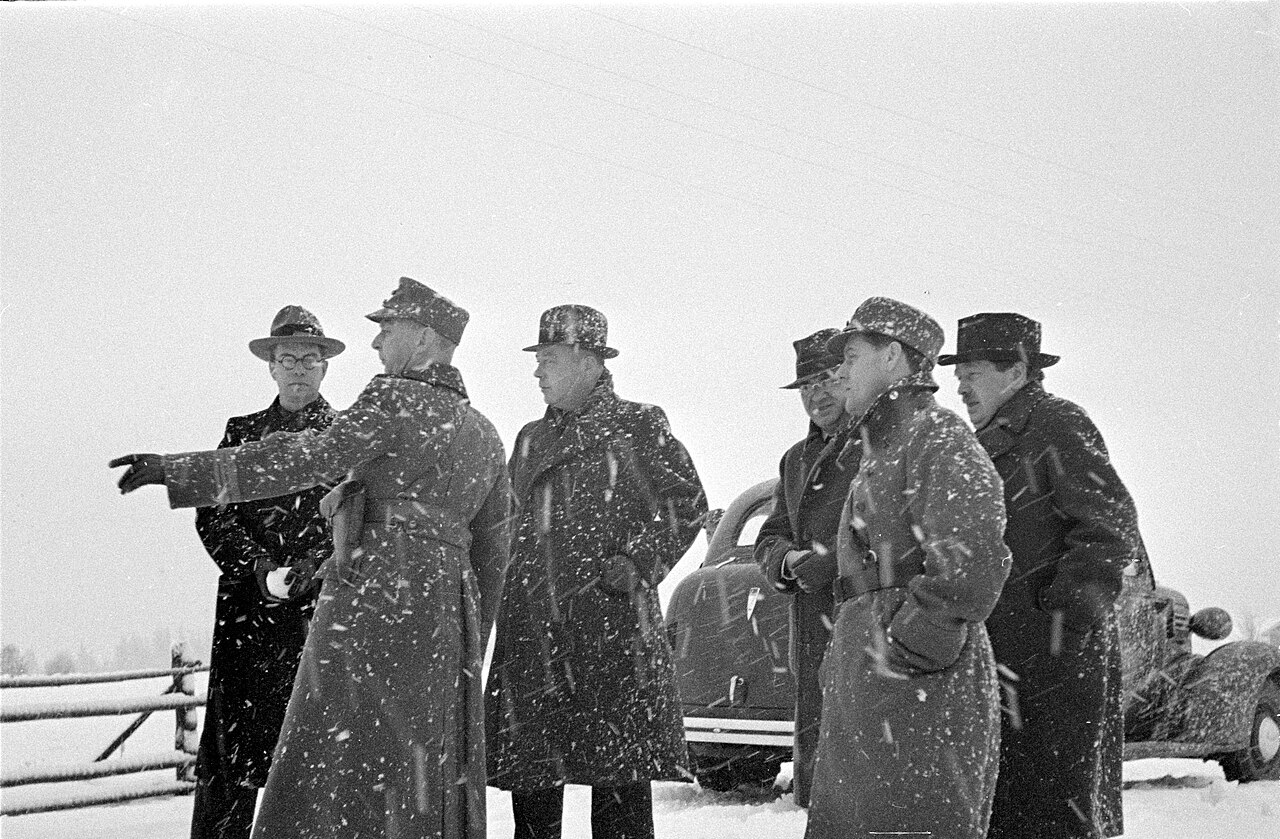
TODAY IN FINNISH HISTORY · 26 NOVEMBER
Watch the English video on Facebook: https://www.facebook.com/reel/1050981651369115
Watch the English video on YouTube: https://youtube.com/shorts/ckCQS2i2wcE
On 26 November 1939, an incident near the Finnish–Soviet border became a turning point in Finland’s history. The Soviet Union accused Finland of firing on the village of Mainila, an allegation that Finland immediately rejected following its own investigation. Four days later, the Soviet Union attacked Finland, marking the beginning of the Winter War.
What happened?
On Sunday, 26 November 1939, shots were heard at the village of Mainila on the Karelian Isthmus, near the border between Finland and the Soviet Union.
The Soviet authorities claimed that Finnish artillery had fired seven shots into the village, killing four Soviet soldiers and wounding nine. According to the Soviet account, Finland was responsible for the incident.
Finland immediately investigated what had happened. However, the findings of the Finnish investigation contradicted the Soviet version of events: the shots had been fired from the Soviet side of the border rather than from Finnish territory.
There was another important detail. Finnish artillery had been positioned too far from the border to reach Mainila. Marshal Mannerheim had previously ordered the guns to be pulled back as a precaution against precisely this kind of provocation.
The position of the Finnish artillery was therefore central to understanding the incident. Finland’s denial was supported not only by the findings of its investigation but also by the fact that its guns could not reach the village.
Despite Finland’s rejection of the accusations, the incident became a decisive moment in the rapidly deteriorating relationship between the two countries.
Background
To understand the significance of Mainila, it is necessary to look at the political situation in Europe during the autumn of 1939.
The Second World War had begun in September, and relations between Finland and the Soviet Union were increasingly tense. The Mainila incident did not occur in isolation but followed a period of difficult negotiations between the two neighbouring countries.
The Soviet Union demanded territorial concessions from Finland, including areas of the Karelian Isthmus and military bases on the Gulf of Finland. Moscow justified its demands by citing the security of Leningrad.
Finland, however, refused to accept the Soviet demands. The disagreement concerned Finnish territory and the Soviet Union’s stated security interests.
Although a non-aggression pact remained in force between the two countries, negotiations had become increasingly difficult. The existence of the agreement did not resolve the underlying territorial dispute or ease the growing political tension.
It was against this background that the Mainila incident occurred. What might initially have appeared to be an isolated border incident became the basis for a much wider confrontation.
What happened next?
On 28 November 1939, two days after the Mainila incident, the Soviet Union renounced its non-aggression pact with Finland.
On 30 November, the Soviet Union attacked Finland. The Winter War had begun.
The sequence of events was remarkably brief. In just four days, the situation had developed from disputed accusations concerning a border incident into an invasion. The non-aggression pact that had remained in force during the earlier negotiations was no longer in place.
Russia has subsequently acknowledged that the Mainila incident was staged to provide a pretext for war.
This later acknowledgement confirmed the essential conclusion of Finland’s original investigation: the Soviet accusation against Finland was false.
The historical significance of Mainila lies in this distinction. The incident was not a genuine Finnish attack that subsequently led to war. Instead, it was a staged provocation used to justify military action against Finland.
Why it still matters
The Mainila shots occupy an important place in Finnish history, not because of the incident alone, but because of the purpose it served.
They demonstrate how a fabricated accusation can be used to justify military aggression and how quickly diplomatic agreements can lose their protective value when one party chooses to disregard them.
The incident also highlights the importance of distinguishing between official allegations and independently established facts. Finland’s investigation contradicted the Soviet claims from the beginning, yet the accusations were still used as a pretext for war.
Mannerheim’s precautionary decision to withdraw Finnish artillery from the border is another significant aspect of the story. Although the decision could not prevent the false accusation, the position of the guns provided important evidence against the Soviet account.
Remembering Mainila therefore means more than remembering the events preceding the Winter War. It also offers a historical lesson about misinformation, political pressure and the importance of examining the evidence behind public claims.
The events illustrate why an accusation should not be accepted as an established fact simply because it has been issued by a government. Evidence, investigation and historical context remain essential to understanding what actually happened.
For Finland, 26 November remains a significant date in the history of the country’s independence.
The events of Mainila continue to remind us why historical accuracy matters.
Also on this day: Nils-Aslak Valkeapää
On 26 November 2001, the Sámi writer, poet and musician Nils-Aslak Valkeapää, also known as Áillohaš, died.
Born in 1943, Valkeapää expressed himself through literature, poetry and music.
His remembrance offers a different perspective on this date in history, recognising the importance of Sámi cultural expression alongside Finland’s political and military history.
Sources: Finnish National Archives, Military Museum, Wikipedia (Mainila shots), Soviet note of 26 Nov 1939 (Molotov’s note, published by the Finnish Ministry for Foreign Affairs).
Read also

Svinhufvud’s Senate Took Office on 27 November 1917 – Nine Days Before Independence
20 hours agoRead next in the same section
The Sermon That Launched the First Crusade – 27 November 1095Report an error · Discuss on Facebook @arkisuomi
Publisher: Arki Suomi · About us and the newsroom · Contact